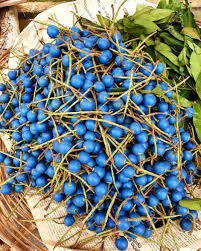
In the realm of natural healing and nutritious diets, few fruits hold as much promise as the Blue Olive. Known scientifically as Elaeocarpus serratus, this tropical fruit is not only a staple in spiritual traditions but also a powerhouse of nutrition and health benefits. Found primarily in Sri Lanka, the Blue Olive is celebrated for its unique flavor, rich nutritional profile, and diverse health benefits.
What is Elaeocarpus Serratus?
Elaeocarpus serratus, commonly known as the Blue Olive, is a tropical flowering plant in the family Elaeocarpaceae. It thrives in the lush regions of Sri Lanka, southern India, Assam, Bangladesh, and other parts of the Indian subcontinent. The Blue Olive is almost perfectly spherical with a bright blue edible skin and a smooth green fruit about 2.5 cm long.
Origin of Blue Olive Fruit
Elaeocarpus serratus has a disjunctive distribution, being native to Sri Lanka and southern India and also found in Assam, Bangladesh, and other parts of the north Indian subcontinent. In Sri Lanka, the Blue Olive is highly valued for both its culinary and medicinal properties.
Other Names for Blue Olive Fruit
- Sinhala: veralu (වෙරළු), Nil Veralu
- Tamil: veralikkai
- Malayalam: kaarakka, kaara
- Sylheti (Bangladesh): belfoi (ꠛꠦꠟꠚꠁ)
- Bengali: jalpai (জলপাই)
- Karbi (Assam): okhi-siming
- Assamese: zolphai (জলফাই)
- Meitei (Manipur): chorphon
- India: rudraksh, bead tree
- English: Ceylon-olive
Appearance and Taste of Blue Olive Fruit
The Blue Olive is characterized by its bright blue edible skin and a brown seed with a hard outer shell inside the fruit. The fruit has a slightly sour taste when ripe and is astringent when unripe. It is a versatile ingredient in various culinary traditions.
Varieties of Blue Olive Fruit
Recommended varieties of Blue Olive include local cultivars with round and oval fruits. Other notable varieties are gal veralu, nil veralu, thiththa veralu (Elaeocarpus amoenus), and pol veralu.
Nutritional Contents of Blue Olive Fruit
Blue Olive is packed with antioxidants, minerals, vitamins, and valuable antioxidants. It possesses anti-inflammatory, antibiotic, anti-anxiety, analgesic, antidepressant, and antihypertensive properties. Here is a breakdown of its nutritional content per 100 grams:
- Energy: 28 kcal
- Protein: 0.155 g
- Fat: 0.52 g
- Carbohydrates: 0.64 g
- Fibre: 0.8 g
- Ash: 0.51%
- Calcium: 5 mg
- Iron: 0.4 mg
- Phosphorous: 2.3 mg
- Ascorbic Acid: 8 mg
- Thiamine: 0.01 mg
Health Benefits of Blue Olive Fruit
Fights Cancer
Blue Olive contains squalene and terpenoids, compounds with anticancer properties. The phenolic compounds and Vitamin C in Ceylon olives are effective in treating and preventing various types of cancer.
Boosts Heart Health
The thiamine in Blue Olive is essential for glucose metabolism and helps in nerve relaxation, muscle function, and heart health.
Fosters Bone and Teeth Health
Rich in calcium, Blue Olive helps form and maintain strong bones and teeth. Phosphorous aids in calcium absorption and strengthens teeth.
Protects Eyes
Vitamin C in Blue Olive can lower the risk of cataracts and slow the progression of age-related macular degeneration (AMD).
Improves Skin Health
Extracts from Veralu leaves and Vitamin C treat ulcers, eczema, and fungal infections of the skin.
Promotes Hair Growth
Veralu leaf powder makes hair smooth and glossy, protecting it from moisture loss, lice, and dirt.
Enhances Mood
Thiamine in Blue Olive helps alleviate physical and mental stress, enhancing mood.
Helps Brain Function
Vitamin C plays a role in neurotransmitter synthesis and cognitive function, promoting good sleep and relaxing brain nerves.
Aids Digestion
Blue Olive treats hemorrhages, gastric disorders, and constipation. The leaves’ paste cures ulcers, while the fruit treats dysentery, diarrhea, joint swelling, and eczema.
Strengthens Immune System
Vitamin C in Blue Olive supports the immune system by protecting against oxidative stress, decreasing tissue damage, and aiding in microbial killing.